5 Essential Safety Measures to Ensure Safety for Construction Workers
Construction work involves a wide range of risks, including the use of heavy machinery, working at heights, electrical systems, and the constant movement of materials. Because of this, it becomes the responsibility of supervisors and contractors to ensure a safe working environment for all workers on-site.
Implementing safety training for workers not only prevents accidents and injuries but also improves productivity and morale. In this blog, we will explore five essential safety measures to protect construction workers.


Share this article

Protect construction workers from a range of workplace hazards with our workmen's compensation policy.
 Premium calculator(Requires manual entry. Mobile Number not required)
List of Content
 Understanding Safety for Construction Workers
- 5 Essential Safety Measures for Construction Workers
- Benefits of Safe Construction Practices
- Use of Technology for Construction Risk Assessment
- Final Takeaway
Understanding Safety for Construction Workers
Construction safety refers to the practices and measures put in place to protect workers from hazards on-site. It involves proper training, use of safety equipment, and adherence to guidelines to prevent accidents and injuries. By prioritising safety, companies can significantly reduce the likelihood of injuries and fatalities. A strong safety culture not only safeguards workers but also enhances productivity, ensures legal compliance, and builds a positive reputation for the organisation.
Also Read: Tips to Improve Construction Site Safety
5 Essential Safety Measures for Construction Workers
Implementing safe construction practices is essential for every business and organisation to protect its workforce. Construction sites are inherently hazardous, with risks such as falls, equipment accidents, and exposure to harmful materials. Here are some essential workplace safety practices to prevent accidents and injuries in construction.
Understand Construction Safety Regulations: One of the essential steps to minimise accidents and injuries is doing a proper construction risk assessment. This process involves identifying potential hazards, assessing risk levels and implementing appropriate control measures to prevent incidents.
Responsibility for conducting construction risk assessments typically lies with the project manager or site supervisor. They ensure that all activities comply with safety regulations and standards, and that workers are aware of the risks involved in their tasks.
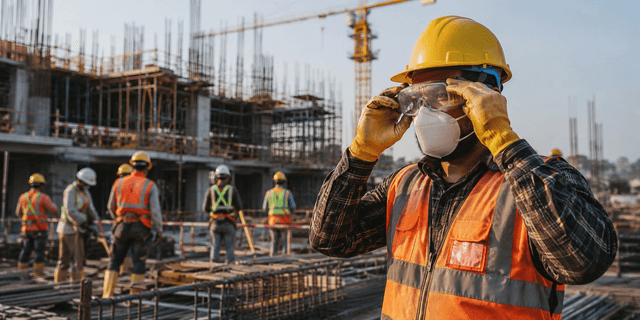
Wear Personal Protective Equipment: Another essential measure for preventing accidents on construction sites is the proper use of Personal Protective Equipment (PPE). Workers, especially those on ground level, are often more exposed to hazards such as falling objects, sharp materials, and moving equipment.
Therefore, they must wear appropriate safety gear in accordance with established safety standards. This includes helmets, safety goggles, high-visibility vests, gloves, and protective footwear. Ensuring consistent use of PPE significantly reduces the risk of injury and helps create a safer, more secure working environment.
Keep the Construction Site Clean: Maintaining a clean, organised construction site is crucial for preventing accidents and protecting workers’ health. Debris, waste materials, and clutter can lead to slips, trips, falls, and other injuries. Additionally, dust and construction particles can cause occupational illnesses, including respiratory issues.
Supervisors must ensure that the site is cleaned regularly and that waste is properly disposed of. For workers operating in dusty environments, companies should also provide appropriate protective equipment, such as respirators or masks, to reduce the risk of respiratory problems.
Know Lifting Precautions: One essential aspect of construction is lifting materials. Workers or labourers need to carry heavy materials to do construction work. It also involved operating lifting machinery, such as cranes. Any error or mishap during the lifting operation can be fatal.
Therefore, workers or labourers must follow the standard lifting precautions. The supervisor also needs to provide proper training to the workers so they can perform their jobs smoothly.
Participate in Construction Safety Programmes: Lastly, active participation in construction safety programmes is essential for creating a safer work environment. These safety training programmes for workers cover hazard recognition, safe operating procedures, emergency response, and proper equipment use. By attending regular safety workshops, drills, and seminars, workers become more aware of potential risks and learn how to prevent accidents. Supervisors and management should encourage all employees to take part in these programmes, reinforcing a culture of safety and ensuring compliance with regulatory standards.
Benefits of Safe Construction Practices
Having workplace safety construction measures not only protects workers' lives and well-being, but it also boosts the workers' morale. Here are some of the common benefits of safe construction practices.
Better Financial Savings: One of the benefits of having safety practices for construction workers is financial savings. Construction businesses that follow safety protocols have fewer accidents or mishaps, resulting in lower workers' comp insurance claims. Not just this, businesses do not have to deal with the legal and medical expenses that typically follow workplace accidents.
Enhanced Productivity: Another benefit of having safe construction practices in place is that it boosts workers' productivity and efficiency. Workers generally feel secure in a safe working environment with a lower risk of accidents. This allows them to work more freely, with greater focus and motivation, resulting in higher productivity.
Improved Organisation Reputation: Another reason for providing safety training to workers is that it helps improve the organisation's reputation. Organisations that have focused on strong safety ethics and culture build trust among their workforce and clients. Stakeholders and clients generally prefer the company with safety measures in place at the time of bidding for the contract.
Ensures Legal Compliance: Businesses must adhere to the safety standards set by governing bodies. Not following safety protocols and guidelines can lead to hefty fines, penalties and even the shutdown of construction projects. For this reason, companies need to follow the safety protocols before the start of the project.
Better Risk Management: With safe construction practices in place, businesses can have better risk management strategies. By including safety measures in the risk management framework, organisations can identify security gaps in advance, preventing financial losses, injuries and delays.
Use of Technology for Construction Risk Assessment
Accident prevention on construction sites can be achieved easily through risk assessment strategies before the project begins. Various modern tools and techniques can ease the whole process. Here are some of the technologies utilised for the construction risk assessment.
Building Information Modeling: BIM or building information modelling offers 4D modelling to streamline the construction process. It is one of the essential modern construction risk assessment tools that help identify hazards before the project begins.
Drones and Unmanned Aerial Vehicles: Another crucial accident prevention construction technique is the use of drones and other vehicles. These devices can be operated remotely and provide aerial surveys of the construction sites. Not only does it help identify hazards, but it can also monitor progress remotely.
Artificial Intelligence (AI) and Machine Learning: Various construction companies also utilised machine learning and artificial intelligence for their ongoing projects. These technologies help analyse large datasets to identify patterns that may indicate potential hazards and risks. As a result, companies can take proactive measures and prioritise safety more effectively.
Virtual and Augmented Reality: Virtual and augmented reality enhance training, design, and safety processes. VR allows workers to experience simulated construction environments, helping them understand potential risks without exposure to real danger. AR, on the other hand, overlays digital information onto the physical world, enabling workers to visualise project details, detect design issues, and improve on-site decision-making.
Wearable Technology: Another crucial modern tool for construction risk assessment is wearable technology. Devices such as smart helmets can detect falls, impacts, and other on-site hazards in real time. Additionally, smart vests and belts are equipped with sensors that monitor workers’ vital signs, such as heart rate, body temperature, and fatigue level, based on environmental conditions.
Mobile Apps & Cloud Platforms: Mobile applications and cloud-based platforms play a significant role in modern construction risk management. These tools enable real-time data collection, reporting, and communication among team members on-site and in offices. Workers can promptly report hazards, access safety guidelines, and complete inspections using mobile apps.
Final Takeaway
Construction projects, whether big or small, need safety protocols in place to prevent accidents and injuries on the site. By conducting safety training for workers, companies not only enforce strong work ethics but also boost the workers' morale. However, construction site accidents can occur even when workplace safety practices are followed.
These mishaps can bring operational and financial stress to the organisation. Therefore, to avoid financial and legal repercussions, organisations prefer to purchase workmen' compensation policies. With a workers' compensation policy, businesses can provide financial support to employees in the event of work-related injuries, disabilities, or fatalities.
With this in mind, if you are looking for workers' comp insurance, TATA AIG offers customised plans tailored to your business needs. With our insurance for labour, workers can cover medical expenses, lost wages, and compensation for their dependents. Our plan also helps employers to comply with legal requirements and reduces the risk of costly lawsuits.
Not just this, our workman policy comes with features such as instant policy issuance, minimal documentation, a streamlined claim process and more. Purchase our workmen's compensation policy now.
Protect construction workers from a range of workplace hazards with our workmen's compensation policy.
Premium calculator(Requires manual entry. Mobile Number not required)Frequently Asked Questions
What are common construction hazards?

Construction work is critical with the high risk of accidents and injuries. Some of the common construction hazards faced by workers are: Falls: While performing their jobs, workers may fall from heights such as ladders, scaffolding, or rooftops due to inadequate safety measures, unstable surfaces, or improper use of equipment. Electrocution: It occurs when workers come into contact with live electrical wires or faulty equipment. This can result from poor wiring, lack of insulation, or failure to follow electrical safety protocols. Heat stress: Construction workers often work in extreme weather conditions, especially in hot environments. Prolonged exposure to high temperatures can lead to dehydration, heat exhaustion, or even heatstroke if proper precautions are not taken. Respiratory issues: Construction workers are frequently exposed to dust, fumes, and harmful chemicals such as silica or asbestos. Inhalation of these substances can cause breathing problems, lung diseases, and long-term health complications.
What are 5E’s of accident prevention in construction?
The 5E’s of accident prevention are education, engineering, enforcement, encouragement and evaluation. Here are the explanations and how they create a safe workplace. Education: Under this, employers provide their workforce with training on safety protocols, equipment use and other measures to prevent hazards. Engineering: Under this company, modify the work practices, equipment use, etc., to reduce workplace hazards. Enforcement: Ensures workers consistently follow safety protocols and guidelines to create a safe environment. Encouragement: Under this, organisations promote a positive safety culture by rewarding employees and workers for following safety protocols. Evaluation: Lastly, organisations need to conduct regular audits and reviews of accident reports and safety protocols.
What is meant by an emergency response plan?
An emergency response plan is a structured set of procedures designed to help an organisation respond effectively to unexpected situations, such as accidents, fires, natural disasters, or medical emergencies. It outlines the actions to be taken, roles and responsibilities, communication methods, and safety measures to protect workers, minimise damage, and ensure a quick and organised response.
What are the safety laws for construction in India?
Construction safety in India is governed by the Building and Other Construction Workers (BOCW) Act, 1996. The law focuses on maintaining the proper safety conditions on the construction site. Workers need to follow the established construction safety guidelines while on site. Failure to comply with the law can result in fines and penalties from the relevant bodies.
What is the 20-20-20 rule in construction safety?
The 20-20-20 rule states that every 20 minutes, workers should take 20 seconds to look at least 20 feet around their work area to identify any potential hazards. This practice helps workers stay alert and aware of their surroundings, reducing the risk of accidents and improving overall site safety.
Read More
People also search for
labour insurance policyworkmen compensation policy premium calculatorgroup medical insurancegroup health insurance premium calculatorPI Insuranceprofessional indemnity for lawyersPI Insurance for Doctorsprofessional indemnity insurance for chartered accountantscompany secretary indemnity insuranceprofessional indemnity insurance for interior designersprofessional indemnity insurance for teachersprofessional indemnity insurance for it companiesEngineering InsuranceContractors Plant Machinery InsuranceErection All Risk InsuranceContractors All Risk PolicyLiability Insurance CoverageCyber InsuranceKey Insurance term
Marine Cargo InsuranceMarine Transit Insurancemarine insurance premium calculatormarine sales turnover policyOpen Marine Insurance PolicyMarine Freight InsuranceFire And Burglary Insuranceshopkeepers insuranceBurglary Insurance Policyfire insurance policyOffice Insurance PolicyTheft Insurance Policycommercial property insuranceStandard Fire and Special Perils PolicyShare this article
Latest from our blogs
Workers' Comp & Workplace Safety Explained
Understand how workers' compensation and workplace safety practices work together to reduce risk today.
Read More
Safety Helmets vs Hard Hats: What to Know
Compare construction safety helmets and hard hats and know which protection suits your site before you decide.
Read More
Safety Inspection Checklist Steps Explained
Follow these essential steps of a safety inspection checklist to keep your workplace secure before you decide.
Read More"Disclaimer: The content of this article is for general informational purposes only and is subject to change. It is based on information available at the time of writing.
Any insurance-related information given above cannot be interpreted as policy coverage. It should not be considered insurance, legal, regulatory, or other professional advice, or a substitute for the terms and conditions of your workmen compensation insurance policy.
Workmen compensation insurance coverage, benefits, exclusions, limits, eligibility criteria, and other applicable conditions are subject to the terms of the respective policy document. Please refer to the applicable policy document for complete details. Readers are advised to verify the latest information with the relevant authorities or official sources before making any decisions.
Any reference to workmen compensation insurance or TATA AIG is for general awareness only and does not constitute an offer, recommendation, or advice to purchase a workmen compensation insurance policy from TATA AIG. TATA AIG does not guarantee coverage for any specific claim, compensation, loss, liability, or situation based solely on the information provided in this article."